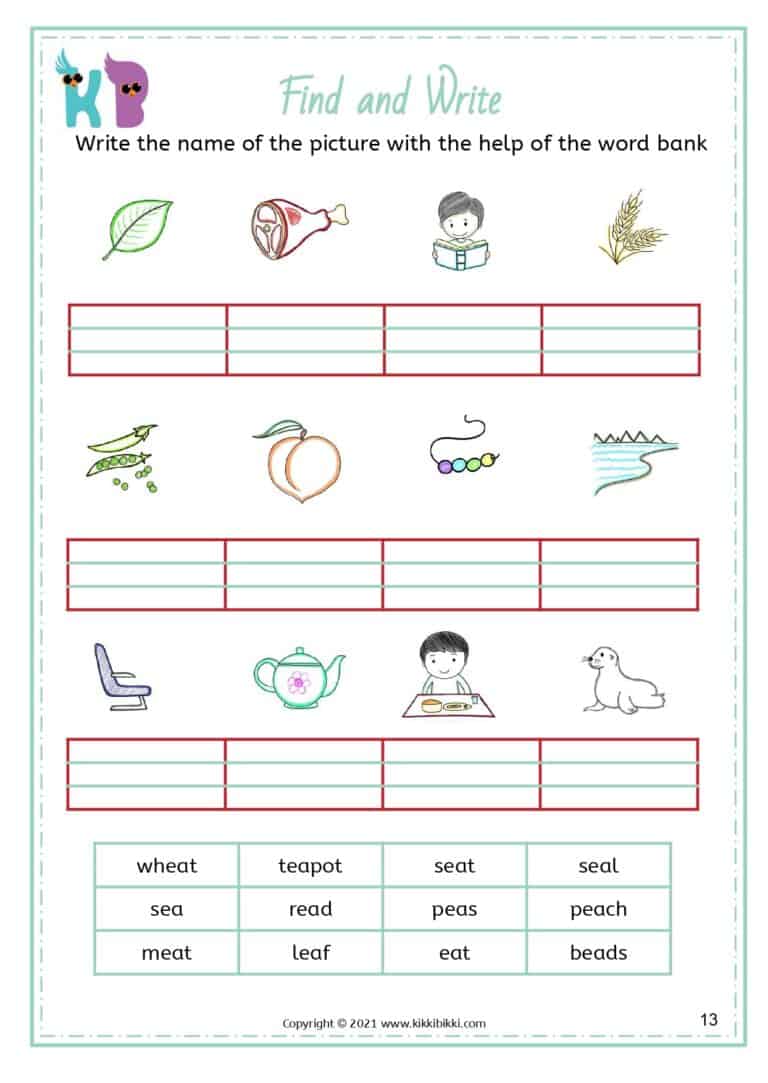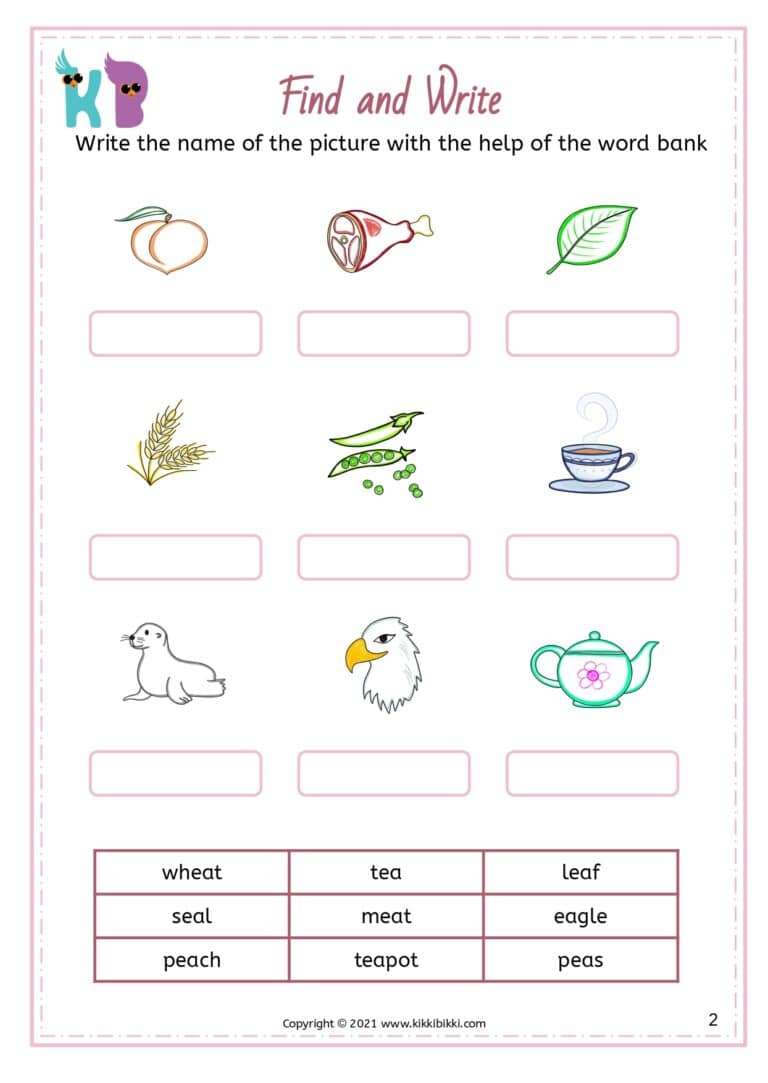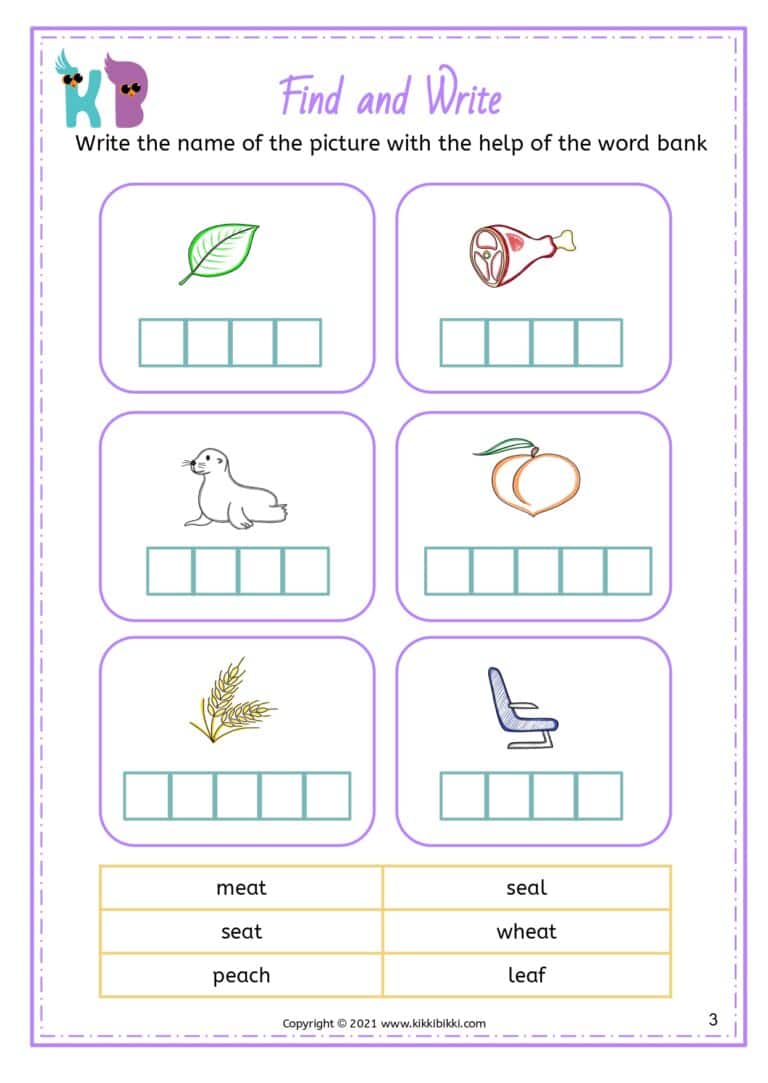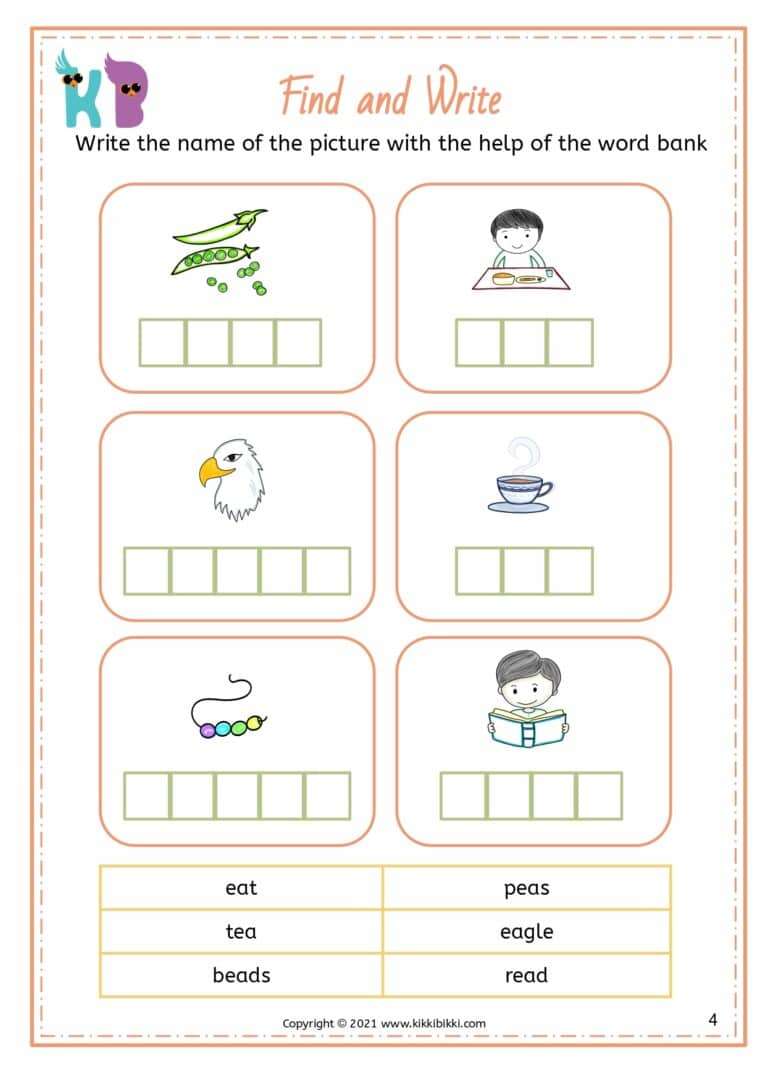
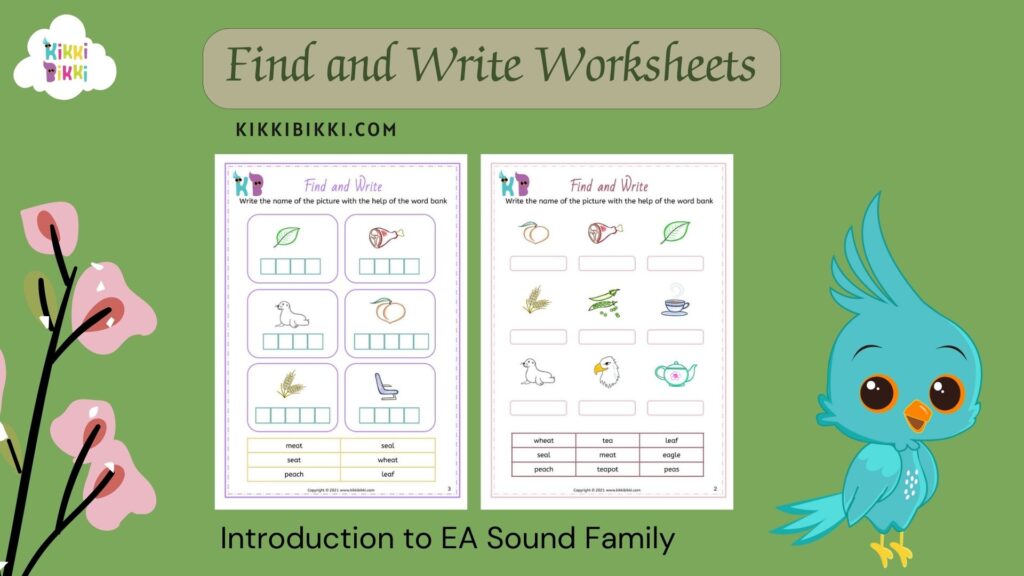
The “EA” digraph is a powerful duo that combines the letters “e” and “a” to create a unique sound. In most cases, it produces the long “e” sound. Here are some key points about the “EA” sound:
Long “e” Sound:
The most common sound associated with “EA” is the long “e” sound, as in words like:
tea, leaf, peach, beach, and treat.
When you see “EA” in a word, think of that refreshing “eeeee” sound!
Other Sounds:
Interestingly, “EA” can also make other sounds:
Short “e” (as in “head”): Pronounced like ĕ(according to the American Heritage Dictionary) or ɛ(according to the International Phonetic Alphabet).
Examples: deaf, dead, meant, bread, dread, death, sweat.
Practice Makes Perfect:
Encourage young learners to practice the “EA” sound by repeating words aloud.
Whisper it, say it in a silly voice, and have fun exploring!
Remember, mastering vowel digraphs like “EA” opens up a world of reading possibilities. Happy phonics adventures! 

If you’d like more resources or worksheets related to the “EA” sound, feel free to explore our collection. Let me know if there’s anything else I can assist you with!